
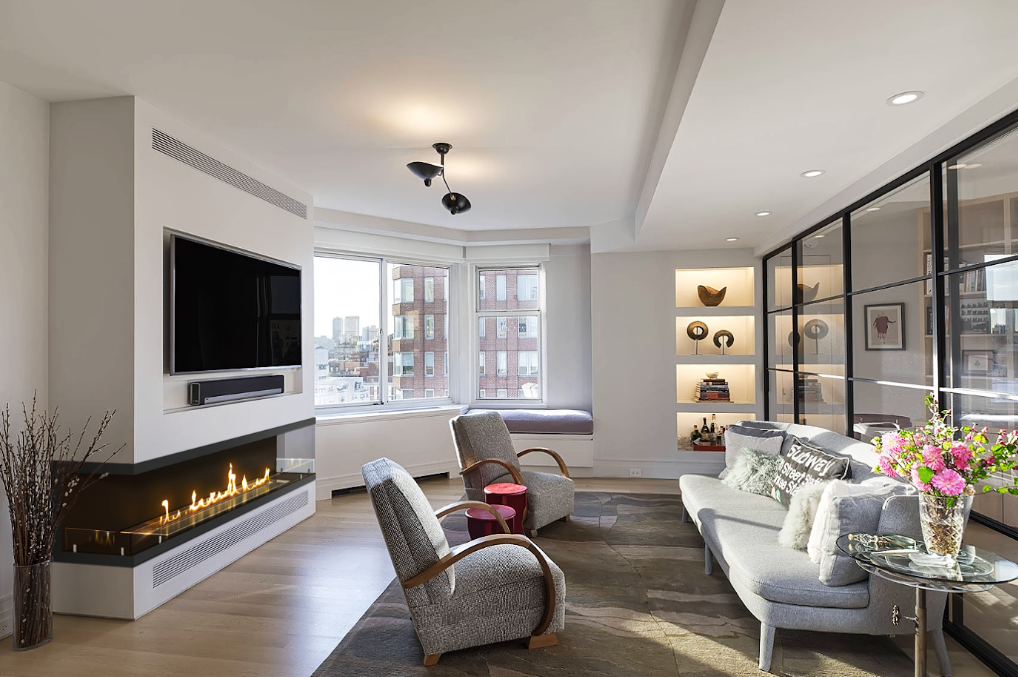
A biofireplace gives you a real flame without a chimney, so it can be installed even in an ordinary apartment. But it is a real flame, and clients who come to us almost always ask about safety: is there a fire risk, is it safe for children and pets, will there be carbon monoxide? Here is what really matters and how modern biofireplaces address these concerns.
Children and pets
Parents often ask whether a biofireplace has any protection. It is important to understand that the glass on a biofireplace does not protect against anything. It heats up itself and can cause minor burns. Most biofireplaces are open with a live flame, so children need to be taught not to go near it.
The only protection for children is making sure they cannot switch the fireplace on themselves. For this, automatic biofireplaces offer a PIN code, button lock and other safety features.
Some manufacturers used to cover the fireplace niche with a metal mesh. This idea did not catch on: the mesh had to be removed every time to refuel, switch on or switch off the fireplace, so nobody uses it today.
In our experience, there have been no incidents with children or pets. Clients even send us photos of cats lying next to the biofireplace: they don't go near the flame, but they enjoy the warmth, perhaps even more than their owners.
Ventilation and room size
A mandatory condition is a supply of fresh air to the room where the biofireplace operates. It can be provided by a heat recovery ventilator, supply and exhaust ventilation or a window opened for airing.
The minimum room size for a biofireplace is 20 m². But it depends on the length of the flame line: the longer the line, the larger the room should be. A biofireplace gives off quite a lot of heat, so the room size and ventilation must meet the manufacturer's requirements.
Where not to install it
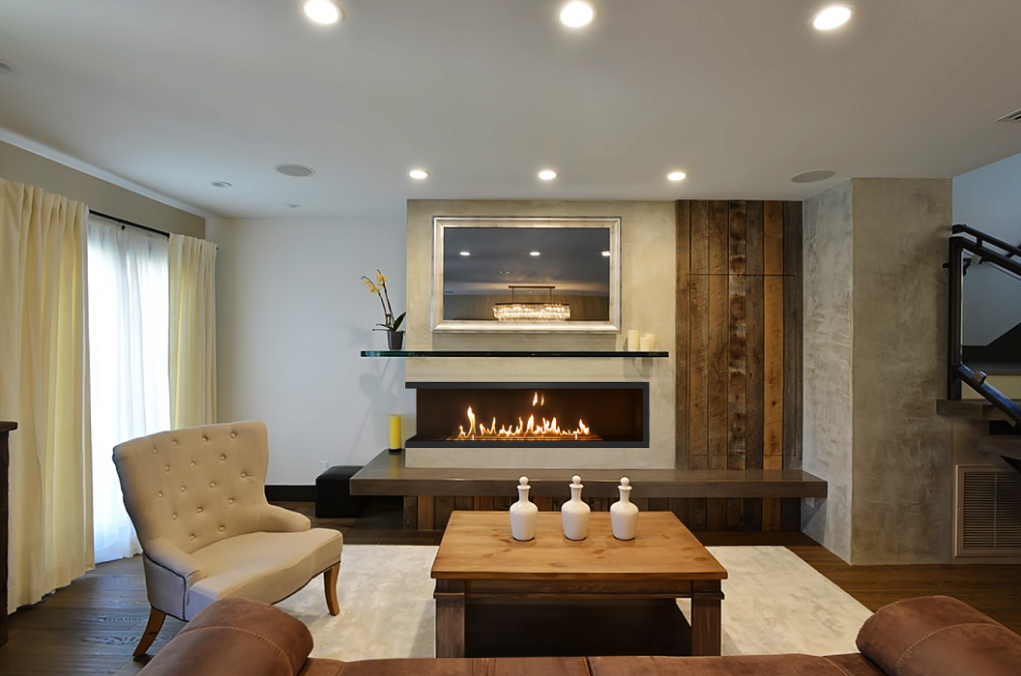
A biofireplace should be placed at least 1 metre away from curtains, furniture and any objects that can easily catch fire. It is equally important to install it correctly in a niche relative to the TV and furniture that could be damaged by heat or warm airflow from the fireplace.
We go through every project in detail with the client and check every visualisation and every solution against the technical requirements. Contact our managers — they will help you install a biofireplace safely and correctly. You can see biofireplaces working at our showroom at the 4ROOM shopping center in Petropavlivska Borshchahivka.
Refuelling: manual or automatic
Manual refuelling means pouring biofuel into the fireplace by hand through a funnel. The downsides:
- fuel is easy to spill, and then everything has to be wiped up;
- a petite woman may not want to, or be able to, lift a 5-litre canister, so she often has to wait for her husband;
- in an automatic biofireplace with manual refuelling you can overfill the tank: an overfill error is triggered and the excess fuel has to be removed somehow, which is very inconvenient.
Automatic refuelling is much more convenient. You put the canister on the floor, connect the hose to the fireplace, lower it into the canister and press a button — the fireplace takes exactly as much fuel as it needs. There is no overfilling, which is why we recommend modern models with auto-refuelling.
Do you need permits?
No. In Ukraine, installing a biofireplace in an apartment requires no permits from the developer, homeowners' association or management company. Approvals may only be needed for commercial premises — cafés, restaurants, hotels — and they mostly concern fire safety. More on that in our article on documents for restaurants.
Automation and safety sensors
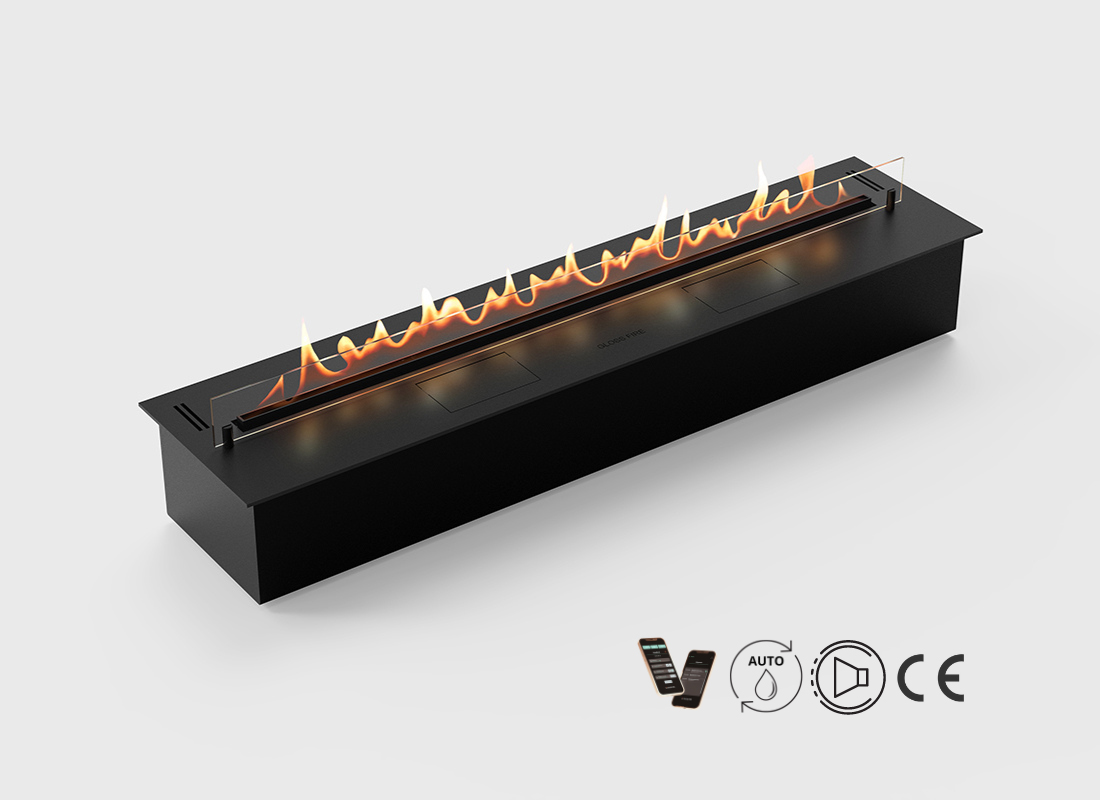
Automatic biofireplaces have various sensors that constantly monitor the fireplace's condition, the heating of internal components and all operating cycles. In an emergency they switch the fireplace off.
- Shock sensor: if something falls on the fireplace or there is an earthquake, the fireplace detects it and switches off.
- CO₂ sensor: if the room is closed, no fresh air comes in and the carbon dioxide level exceeds the limit, the fireplace switches off.
- Ambient temperature sensor: in a cold room, below 14 °C, an automatic biofireplace may not switch on. This protects the unit itself: condensation can form in a cold room and damage the fireplace.
- Voice guidance: Gloss Fire automatic biofireplaces announce by voice exactly which error has occurred. This reassures clients and makes it easy to check with a manager what to do next.
When you buy an automatic biofireplace, you know that sensors working around the clock already take care of your safety and the safety of the fireplace itself. So installing an automatic biofireplace in an apartment is completely safe.
A case from practice
A big drawback of mechanical biofireplaces is that while refuelling you cannot see how much fuel you have poured in or how full the tank is. Sometimes clients try to light up the tank with a lighter to see how much space is left. Never do this: a flash fire is possible, and such cases have already happened in practice.
A real live flame in an apartment requires proper and careful handling. Read the safety instructions carefully and follow them — and your biofireplace will delight you for years.
